About the programme
Field of study group: Social Sciences
Field of study: Economics
Qualification degree: Bachelor of Social Sciences
Duration of studies: 4 years (240 ECTS)
Annual tuition fee for a state non-funded place (2026): 4 000 Eur
Tuition fee waivers for students admitted to non‑state‑funded places: For the top 5 percent of students admitted in 2026, the tuition fee for the semester may be reduced by 25 to 100 percent, depending on the academic results of the previous semester. To qualify, all subjects from the previous semester must be graded at least 9 on a 10-point scale.
Tuition fee waivers for Ukrainian citizens: Students from Ukraine with the highest admission results may receive a reduction of up to 100 percent of the tuition fee for the first (autumn) semester.
The study programme combines economics and management, enabling you to solve both theoretical and practical issues. You will understand how economic systems operate, propose and implement sustainable business ideas, and develop innovative management solutions. Knowledge in economics, management, entrepreneurship, and risk management will allow you to assess and forecast economic phenomena and market changes. Additionally, you will apply sustainable development practices, analysis, and business analytics tools to guide management decisions and enhance organisational performance effectively.
Learning Outcomes
- After completing your studies, you will be able to set goals for your activities, plan your work, and responsibly pursue results. You will learn to collect, systematise, and analyse information, apply information technologies, and critically evaluate data to make reasoned decisions. You will be able to communicate effectively in English, work collaboratively in a team, generate new ideas, and justify proposed solutions.
- You will understand economic principles and be able to apply them in practice – analysing and modelling economic phenomena, assessing market changes, and evaluating the impact of the macroeconomic environment on the activities of organisations. You will learn to forecast economic and financial indicators and make management, investment, and financing decisions. You will be able to evaluate the activities of organisations, propose effective management solutions, and implement economic goals by planning, organising, managing, and controlling various areas of activity.
- You will learn how to solve financial management problems, apply business innovation and competitiveness enhancement methods, and plan marketing activities. You will understand the importance of human and social capital for the organisation's activities and be able to make sustainable, responsible decisions, taking into account the needs of society and the environment.
Distinctive Features of the Study Programme
- The study programme trains economists with managerial competencies and is designed to provide graduates with comprehensive theoretical and practical knowledge for their working life.
- The principles of the circular economy and business models based on the sharing economy are explored. The students also learn how to navigate the digital economy and build the skills to set up and run their own businesses.
- The study programme combines classical teaching methods with modern and interactive ones, including business analytics tools. In addition to the University lecturers, representatives of companies with extensive experience in economics, finance, and management also share their practical knowledge.
Study Programme Committee
Assoc. Prof. Dr Ilona Kiaušienė (Head of SPC)
Prof. Dr Asta Mikalauskienė
Assoc. Prof. Dr Rasa Pušinaitė-Gelgotė
Assoc. Prof. Dr Ingrida Šarkiūnaitė
Assoc. Prof. Dr Indrė Ščiukauskė
Assist. Dr Antanas Ūsas
Social partner Rimas Valungevičius (Director of the Data and Technology Department at the National Energy Regulatory Council)
Social partner Greta Makūnaitė (Chief Economist at UAB "Kauno autobusai")
Evelina Martinkutė (students' representative)
Programme structure
|
Subjects
|
Credits
|
|
Semester 1 Autumn
|
|
Compulsory Courses
|
30.0
|
|
Academic and Information Literacy
|
5.0
|
|
English for Specific Purposes Proficient user level - C(1) I/II p.
|
5.0
|
|
Fundamentals of Finance
|
5.0
|
|
Management
|
5.0
|
|
Microeconomics
|
10.0
|
|
Semester 2 Spring
|
|
Compulsory Courses
|
25.0
|
|
English for Specific Purposes Proficient user level - C(1) II/II p.
|
5.0
|
|
Fundamentals of Accounting
|
5.0
|
|
Macroeconomics
|
10.0
|
|
Mathematics
|
5.0
|
|
Course unit (module) of Individual Studies
|
5.0
|
|
Semester 3 Autumn
|
|
Compulsory Courses
|
20.0
|
|
Decision Theory
|
5.0
|
|
Economic Statistics
|
5.0
|
|
History of Economic Thought
|
5.0
|
|
Marketing
|
5.0
|
|
Course unit (module) of Individual Studies
|
10.0
|
|
Semester 4 Spring
|
|
Compulsory Courses
|
20.0
|
|
Econometrics
|
5.0
|
|
Economics of Management
|
5.0
|
|
International Economics
|
5.0
|
|
Urban and Regional Economics
|
5.0
|
|
Course unit (module) of Individual Studies
|
10.0
|
|
Semester 5 Autumn
|
|
Compulsory Courses
|
20.0
|
|
Corporate Finance
|
5.0
|
|
Energy Economics
|
5.0
|
|
Fiscal Policy and Taxation
|
5.0
|
|
Welfare Economics
|
5.0
|
|
Optional Courses
|
5.0
|
|
Project Management
|
5.0
|
|
Public Communication
|
5.0
|
|
Course unit (module) of Individual Studies
|
5.0
|
|
Semester 6 Spring
|
|
Compulsory Courses
|
25.0
|
|
Change Management
|
5.0
|
|
Digital Economy
|
5.0
|
|
Economic Analysis
|
5.0
|
|
Environmental Economics
|
5.0
|
|
Human Resources Management
|
5.0
|
|
Optional Courses
|
5.0
|
|
E-Business
|
5.0
|
|
Financial Markets and Financial Institutions
|
5.0
|
|
Semester 7 Autumn
|
|
Compulsory Courses
|
20.0
|
|
Business Intelligence
|
5.0
|
|
Course Work
|
5.0
|
|
Quantitative and Qualitative Methods in Economics
|
5.0
|
|
Strategic Management
|
5.0
|
|
Optional Courses
|
10.0
|
|
group
|
5.0
|
|
Family Business
|
5.0
|
|
Knowledge Management
|
5.0
|
|
group
|
5.0
|
|
Investment Management and Analysis
|
5.0
|
|
Labor Market Management
|
5.0
|
|
Semester 8 Spring
|
|
Compulsory Courses
|
30.0
|
|
Bachelor Final Thesis (Study field: Economics)
|
15.0
|
|
Practical Training
|
15.0
|
Career Prospects
After completing this programme, you will be able to work in various fields that require analytical thinking, the ability to evaluate economic processes, and make reasoned management decisions.
Career opportunities await you in both the private and public sectors – in companies, organisations, financial institutions, or government agencies. You will be able to work as an economist, manager, finance or marketing specialist, business analyst, project manager, or consultant.
The knowledge you gain will help you plan and evaluate your organisation's activities, forecast financial indicators, make investment decisions, analyse market changes, and develop sustainable business strategies. If you are proactive and creative, you will be able to start your own business, manage it, and implement your ideas both in Lithuania and on the international market.
Career examples
- Industrial and manufacturing companies include: "Kaefer", "Kauno Tiltai", "Hella Lithuania", "Continental Automotive Lithuania", and "Stumbras".
- Trade and logistics sector companies include: "Sanitex", "Imlitex", "Topo Group", "DPD", and "Lithuanian Railways" (LTG).
For applicants
Entry qualifications
An applicant must possess a high school / secondary education diploma (or higher).
N.B. for non-EU/EFTA applicants: the gap since you completed your secondary education should not exceed five years.
The Vilnius University Kaunas Faculty Admission Committee might invite the candidate for a remote interview.
Applicants who have not taken the national university entrance exams in their home country must take an entrance exam.
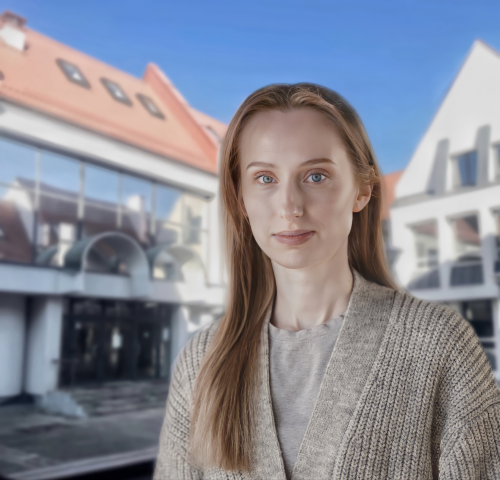 |
International Study Administrator
Indrė Višinskaitė
Phone: (+370) 37 465539
E-mail:
Muitinės str. 8, Kaunas, Room 1.2.05
|
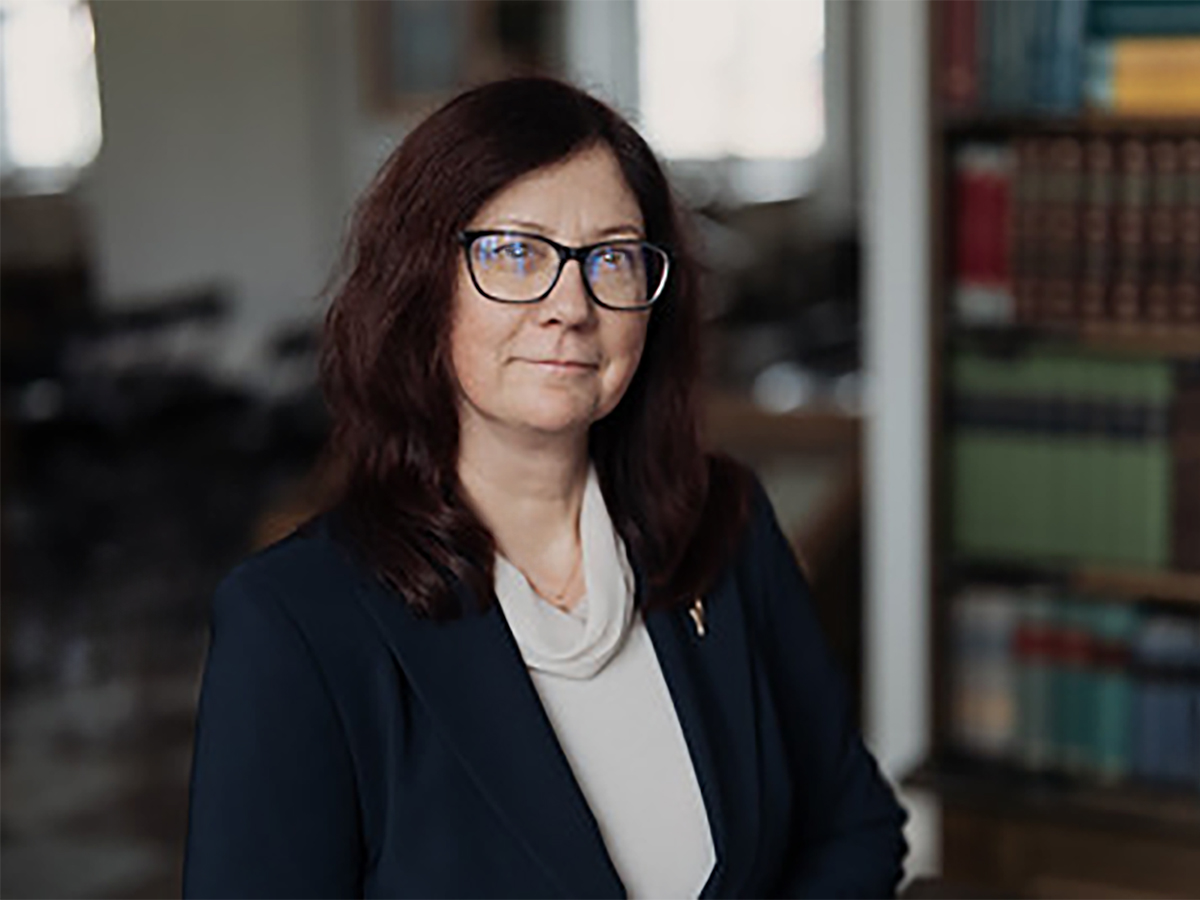 |
Academic Contact
Assoc. Prof. Dr Ilona Kiaušienė
E-mail:
|
Endorsements
“I chose this study programme because it aligned with my long-term goals. I am fascinated by how the business world operates, the market economy of a country, and how money flows. I intend to work at a top-level business organisation as well as build a profitable business using all the tools of economics and business management. The studies have been good so far. Microeconomics is really fun since I learned how consumers and sellers interact, and how the market works. The other courses are also very informative, and I am enjoying my studies. I am curious to see what lies ahead.”
Mohammed Huzaif, a second-year student
"First of all, I sought a balance between the exact sciences and the humanities. It was only when I started working that I realised how much my studies in economics and management had given me: analytical thinking helps me better understand markets and customer needs, management knowledge comes in handy when organising work processes or negotiating, and economic calculations have become part of my daily routine. I am also grateful for my proficiency in the English language. In my second year, I participated in the Erasmus exchange programme at KU Leuven University in Brussels – it was interesting to learn about a different education system. I was afraid that I would fall behind in my studies in Kaunas, but I feel like I have learned even more. The humanity and knowledge of the lecturers were particularly significant, as was the understanding that together, anything can be achieved. I actively participated in student activities and liked the fact that a lot of attention is paid to independent learning, which allows you to plan your time effectively."
Ugnė Šimonėlytė, an alumna, export manager at “MV Group production”
"Every year, I meet young people who are seeking relevant knowledge and new experiences. I see their growing desire to test their potential in the market as soon as possible, and I observe some students successfully starting their careers while still at the university. This study programme is unique in that it provides not only the economics and management knowledge necessary for business, but also increasingly important life skills, such as risk management, environmental analysis, and impact assessment."
Assoc. Prof. Rasa Pušinaitė-Gelgotė, a lecturer of the study programme
Frequently asked questions
Are there more calculations or more management and business planning in these studies?
Management and business planning must be based on calculations. Numbers typically serve a practical purpose, enabling data analysis, understanding economic phenomena, and decision-making.
Do you need to be good at mathematics or economics at school?
A knowledge of economic fundamentals would be beneficial when starting studies in economics and management. During your studies, the subjects covered in school are repeated, with lectures focusing on the most important aspects. Therefore, there is no need to worry if you only studied economics in 10th or 11th grade at school.
Are these studies suitable for me if I'm undecided about whether I want to work in the private or public sector?
Economics and management studies are truly appropriate if you are unsure whether you want to work in the private or public sector. These studies will help you choose where and in which field you want to work or even start your own business. A university education offers a comprehensive understanding of the entire economy and a solid analytical foundation, making it suitable for a wide range of roles.