

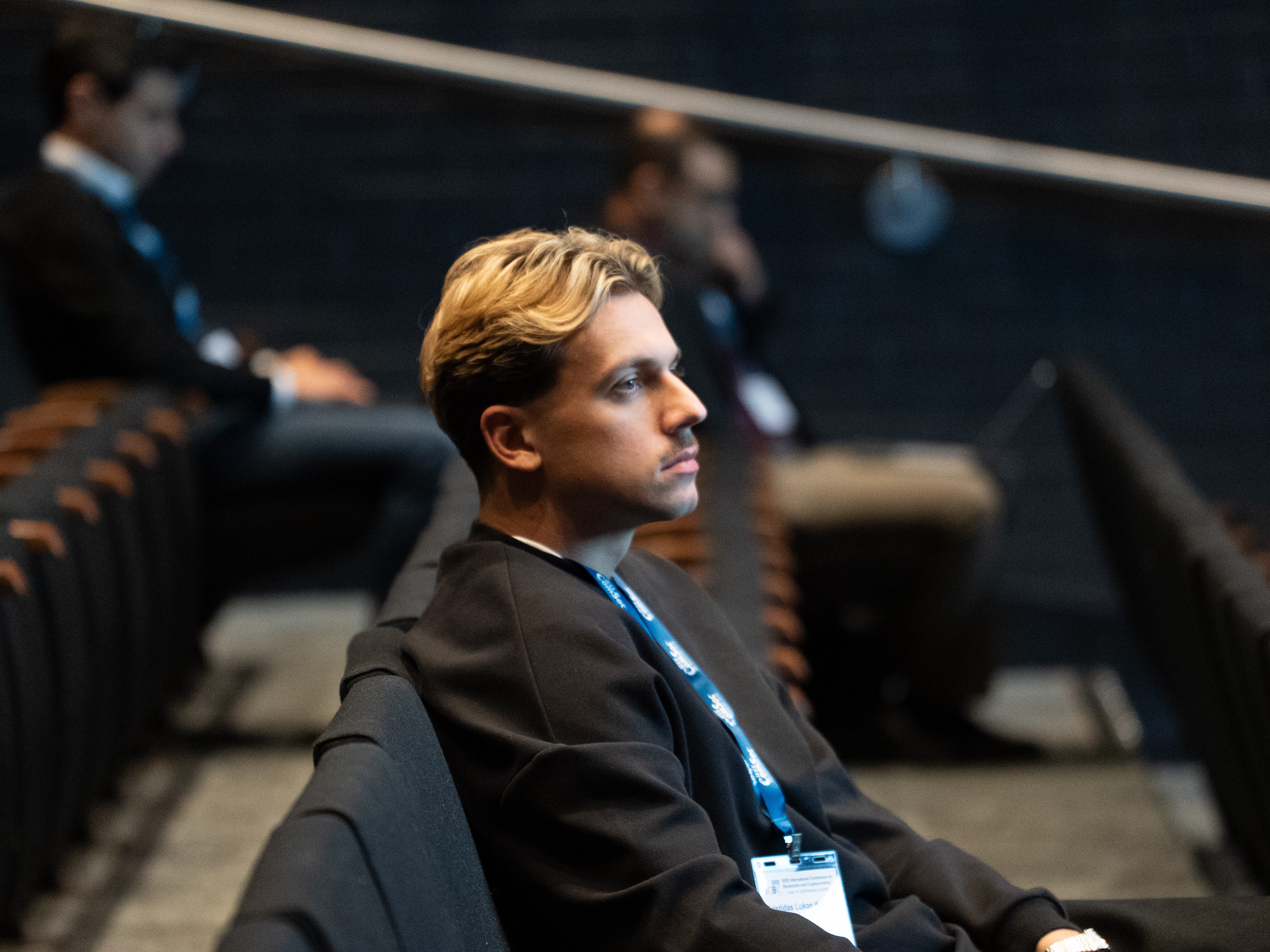
 Research, international publications, a thesis recognized as the best in his master’s program, and the opportunity to present his research findings to the international scientific community—these are the experiences gained by Aristidas Lukas Končius, a graduate of the Master’s program in Financial Technologies at Vilnius University’s Kaunas Faculty. The opportunities that opened up during his studies and his growing interest in the latest technologies motivated him to continue his academic pursuits. This past October, he began his doctoral studies at Vilnius University, where he will delve into the security of artificial intelligence agents.
Master’s Studies—An Opportunity to Discover Your Research Focus
While pursuing his master’s degree in Financial Technologies, A. L. Končius became interested in blockchain technology, digital identity, and zero-knowledge proofs. The latter is a cryptographic method that allows one to verify a statement without revealing the data on which it is based. These technologies are becoming increasingly important in the financial sector, where it is essential to balance reliability, security, and information privacy.
Interest in these topics prompted specific research. Together with researchers from the Kaunas Faculty of Vilnius University, A. L. Končius explored the potential applications of zero-knowledge proofs in digital identity and document authenticity verification. The research results have been published in international scientific journals, and some have been presented at the IVUS and BIS conferences in 2025.
The young researcher completed his master’s degree with a cum laude diploma (Latin for “with honors”). His thesis, “A Prototype for Verifying the Authenticity of Financial Document Transformations Using Zero-Knowledge Proofs,” was recognised as the best in the Financial Technologies study program. For his research, he also received a letter of commendation from the Lithuanian Academy of Sciences in a national student research competition.
A. L. Končius combined his academic pursuits with practical work in the technology sector. In 2024, he participated in an international internship program at the European Organization for Nuclear Research (CERN) in Geneva, where he contributed to the development of visualisation solutions for software systems. While working as an artificial intelligence engineer, he also delved into issues related to large language models, intelligent systems, and their security.
The opportunity to not only gain theoretical knowledge during his master’s studies but also to apply it to solving pressing scientific problems helped the young researcher choose the research direction that interested him most and to consistently pursue his scientific work.
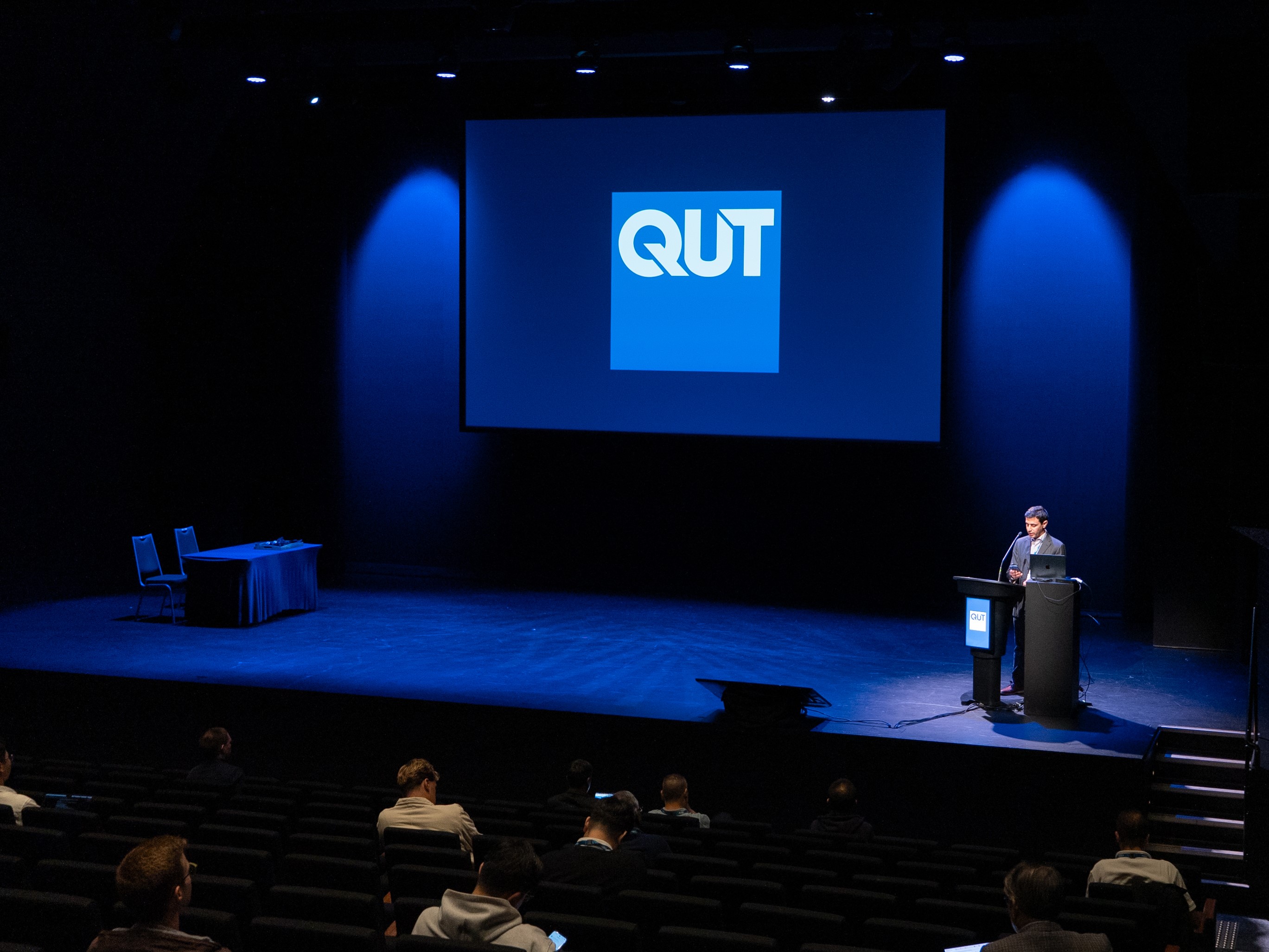 Research results presented at an international IEEE conference
One of the most significant achievements during my master’s studies was my participation in the IEEE (Institute of Electrical and Electronics Engineers), the IEEE International Conference on Blockchain and Cryptocurrency (ICBC 2026), which took place June 1–5, 2026, in Brisbane, Australia.
At the ICBC conference, researchers discussed the latest research in blockchain, decentralized finance, cryptography, digital security, and privacy. A. L. Končius presented a research paper titled “Tile-Based Zero-Knowledge Verification of Grayscale Image Transformations,” co-authored with Prof. Dr. Saulius Masteika and Laura Atmanavičiūtė.
The paper was presented at the ZKDAPPS (Programmable Zero-Knowledge Proofs for Decentralized Applications) research workshop, which focused on the application of zero-knowledge proofs in decentralized systems.
The study examines how cryptographic methods can be used to verify that a digital image has been modified only in a permitted manner—for example, converted to grayscale—without revealing the original image. This is particularly relevant in the financial sector, where it is essential to protect sensitive data when verifying a person’s identity or the authenticity of documents.
The researchers proposed a method in which an image is divided into smaller parts, and a cryptographic proof is generated separately for each part. Experiments showed that using this method, a proof can be generated on a standard computer in less than a minute and a half. Using another method evaluated in the study, generating the proof took more than 45 minutes, while the third method could not be implemented on this computer.
According to A. L. Končius, as artificial intelligence capable of creating extremely realistic images rapidly advances, reliable methods for verifying the authenticity of digital information are becoming increasingly important.
“For a master’s student to present their work at an international conference of this caliber is no small achievement. This experience motivated me greatly and encouraged me to delve deeper into research,” says A. L. Končius.
The conference provided an opportunity not only to present research results to an international audience but also to familiarise myself with other researchers' work, discuss the latest technological trends, and gather ideas for future research. Of particular interest were the possibilities of applying zero-knowledge proofs to ensure the security of artificial intelligence systems.
Ph.D. Studies: Security Challenges in Artificial Intelligence
This past October, he began his Ph.D. studies at Vilnius University. The young researcher will focus primarily on an increasingly relevant field—the security and reliability of artificial intelligence agents.
Artificial intelligence agents are systems capable of independently performing tasks intended for humans: making payments, ordering services, processing data, or collaborating with other agents. As the potential applications of these technologies expand, new questions arise: How can we verify that an artificial intelligence agent has the right to perform a specific action? How can we check whether the granted authorizations are still valid? How can we ensure that an agent, when delegating a task to another system, does not grant that system more rights than it itself possesses? A. L. Končius will seek answers to these questions by employing cryptographic methods and zero-knowledge proofs.
The young researcher is particularly grateful to Prof. Dr. Saulius Masteika for encouraging him to undertake research, prepare a paper for an international conference, and pursue his academic goals. He also thanks the Kaunas Faculty of Vilnius University for the opportunity to present the results of his research to the international scientific community.