Translation of Culture Specific Items in Contemporary Lithuanian Dubbed Films

Due to the fact that they pose numerous challenges to translators, culture-specific items (CSIs) are a particularly interesting and relevant area of research for translation scholars. However, the majority of existing studies explore the rendering of CSIs in written texts, whereas translation of CSIs in audiovisual discourse is still rather scarce. This project explores the translation of CSIs in a sample of dubbed audiovisual products. Dubbing is one of the most complex modes of audiovisual translation arising from the need to maintain different synchronies, namely phonetic synchrony, kinetic synchrony and isochrony. Because in dubbing the dialogues in the source language are eliminated, dubbing tends to rely on domestication as a strategy of translation. However, it is possible that due to globalisation and gradual blurring of boundaries between different cultures, even in dubbing the application of domestication strategy to translate culture-specific items is gradually diminishing. The project seeks to reveal the prevalent strategies and procedures of the translation of CSIs in the selected Lithuanian-dubbed animated films paying close attention to the constraints of dubbing. The theoretical contribution of the project is the intended development of a theoretical model for the analysis of the translation of CSIs specifically designed for the research of dubbed audiovisual products. The results of the research will acquaint the audiovisual translation scientific community with the tendencies of translation of CSIs into Lithuanian as a lesser-represented language and serve as a basis for prospective comparative research. The results will also be valuable to translation students, educators, and practitioners
Henry Parland's semiosphere

The purpose of the project – to study Henry Parland's semiotic continuum, in which the Parlandian meaning is formed – will be implemented by carrying out the following tasks: 1. To analyze communication processes within texts and contexts. 2. To investigate the mobility of Parland’s semiosphere. 3. To determine the effect of the Parland phenomenon on cultural memory. 4. To define Parland’s semiotic continuum.

The final results of this project will provide an opportunity to establish Parland's creative work as an event of intercultural communication and to record a unique fact of cosmopolitan expression in the history of Lithuanian literature and culture. The results of the project will presuppose the possibility to develop the questions of the intersection of global society and art and cultures, will form and revise the regional definition of art, will expand the concepts of intercultural meanings.

Inclusive culture: the study on accessibility of audiovisual products for the visually and hearing impaired

The project “Inclusive Culture: A Study on Accessibility of Audiovisual Products for the Visually and Hearing Impaired” is dedicated towards the analysis of the opportunies for socially vulnerable groups - the visually and hearing impaired - to fully parcipate in the Lithuanian cultural life: watch movies, a􀆩end performances, parcipate in events, etc. Sincean increasing number of audiovisual products in Lithuania have been adapted to both target groups menoned above, there appear to be a tendency that the applicaon methodsused by the companies which develop and distribute audiovisual products or other interested organizaons vary. Therefore, such diversity does not always lead to the high-qualitywork. This project aims at assessing the quality and benefits of the audiovisual products which have already been made accessible in Lithuania. Moreover, needs of blind and deafviewers would be idenfied by processing evaluaons and feedback provided by the target groups. Besides, within the framework of the invesgaons and pracce carried out byforeign sciensts the algorithm of accessibility of audiovisual material to the Lithuanian blind and deaf will be delineated and guidelines for the adaptaon of audiovisual products willbe provided. The project acvies are focused on the qualitave study on the adaptaon of audiovisual products for the visually and hearing impaired. The acvity will be orientedtowards the distribuon and disseminaon of the scienfic informaon which is related to the study results. The factual knowledge, scienfic insights and achieved results would helpto reduce the cultural exclusion of the target groups and therefore contribute to the welfare.

Kick Off meeting 11-12th December 2019

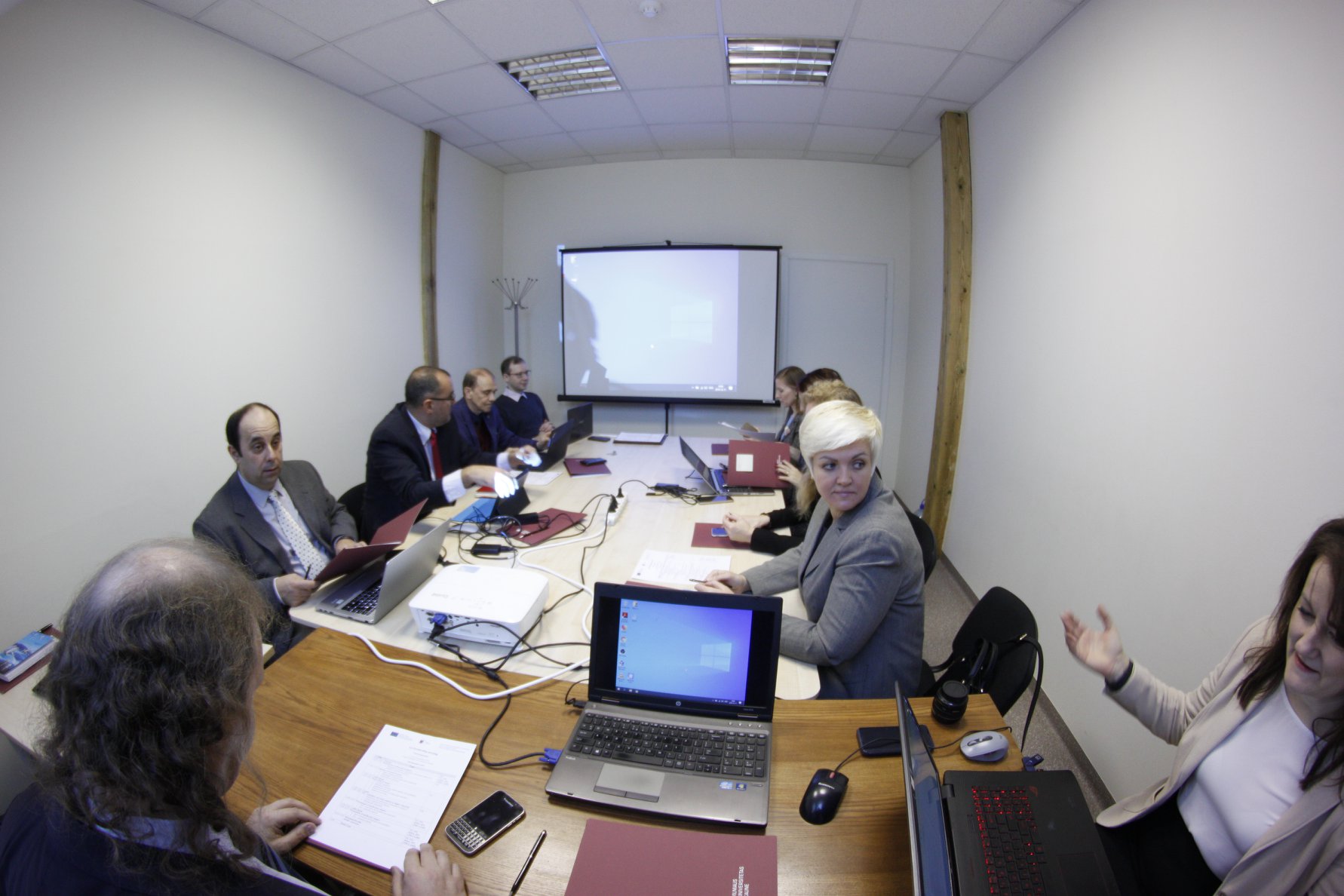
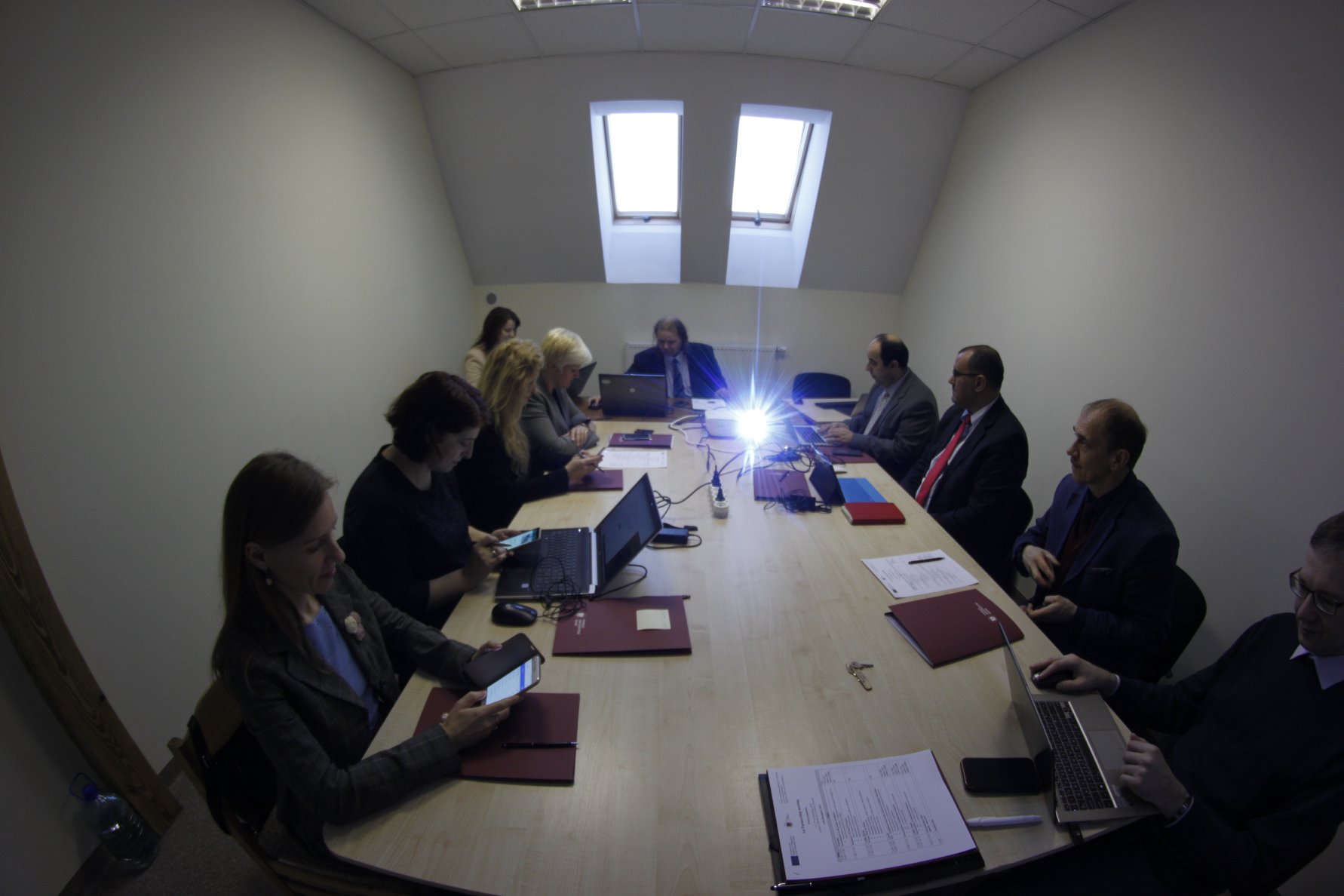
1This first Transnational project meeting took place on December 11-12th, 2019, in Kaunas Faculty of Vilnius University with participants from Portugal, Romania, Latvia and host country Lithuania.
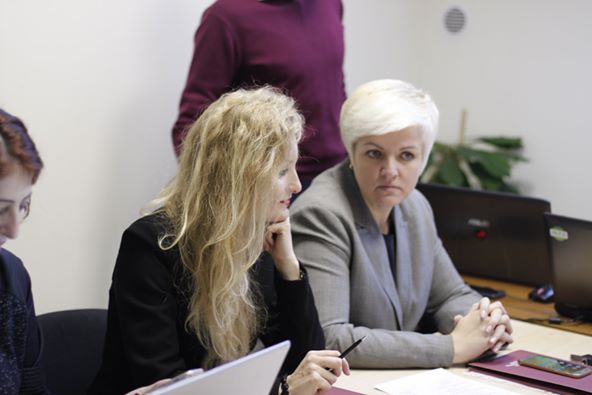
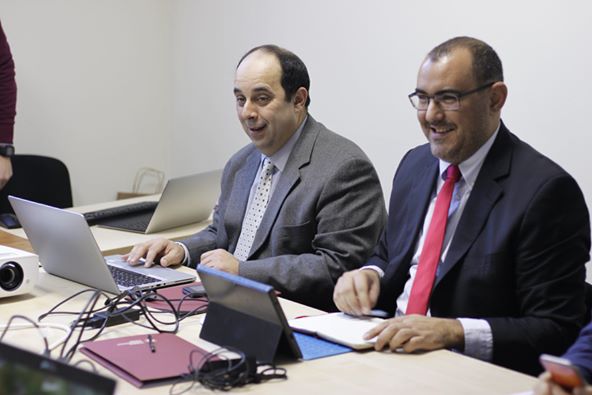

Its scope was to prepare all the activities that will follow in the coming project months as well as to set up the working methodology and distribute concretely the tasks among the partners, to discuss about the Intellectual outputs IO1 and IO2. Also, the partners’ responsibilities for financial rules, reporting dates, the main means of communication and cooperation between partnership was established, the Steering Committee (SC) of the project, with one representative from each partner organization (6 in total) was confirmed as well as risk management plan, internal quality evaluation, dissemination strategies and other questions were discussed.

The next face-to-face meeting will take place in Tomar, Portugal (Autumn, 2020) at which the following will be presented and discussed: the results of IO1 and IO2, agreed  about the Intellectual outputs IO3 and IO4 and localization issues. Partners will evaluate if some adjustment is needed and set up the upcoming work.


234

5

6